Tecnológico Universitario Rumiñahui

- HOME
- PROGRAMS
- ADMISSIONS
- OUTREACH
- INTERNATIONAL
- STUDENT LIFE
- RESEARCH DEPARTMENT
- LIBRARY
Admissions
RU Campus
About RU
- History
- Accreditation
- Rector’s Message
- Governance and Administration
- Institutional Planning
- Philosophy
- About Us
- Ethics and Transparency
- General Regulations
- Institutional Policies
- Accountability
- Organizational Chart
- Code of Ethics
Communications
Quality Assurance
Contact Us
- Main Campus
- Av. Atahualpa 1701 y 8 de Febrero – Sangolquí
- (02) 352-4576 / (02) 233-1628
- info@ister.edu.ec
Social Media
ABOUT THE HIGHER TECHNOLOGY PROGRAM
Programa orientado a la formación de profesionales en el cuidado de la salud y la atención integral de pacientes en diversos entornos clínicos y comunitarios.
- Higher Technical Degree in Nursing
- Duración: 2 años
- Modalidad: Presencial
- RPC-SO-08-No.238-2021
- BROCHURE
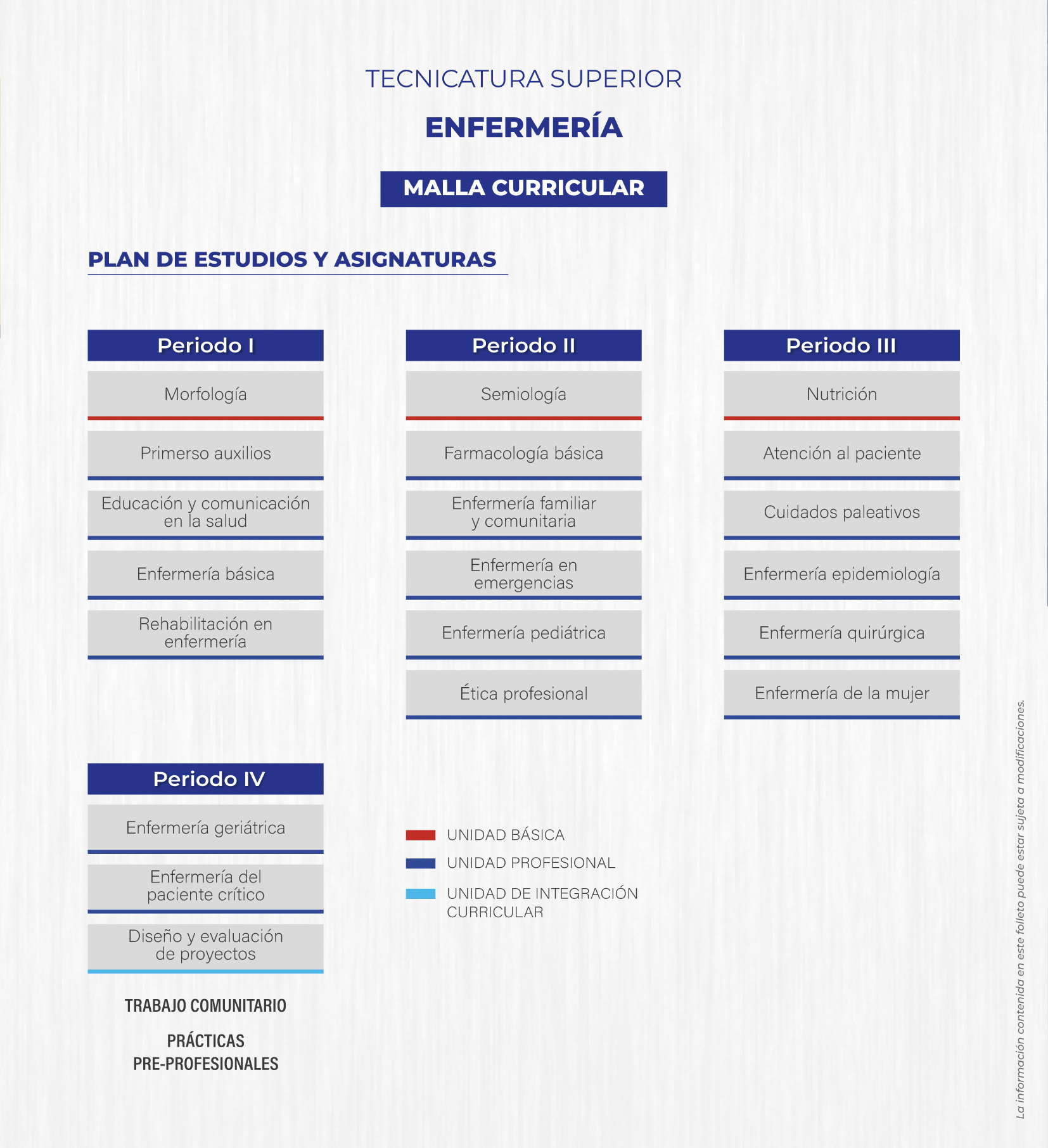
- Malla Académica
Applicants are expected to possess foundational knowledge in natural sciences, particularly biology and chemistry, along with strong communication and teamwork skills and a clear service-oriented vocation. They should demonstrate empathy, respect for diversity, responsibility, and a genuine willingness to learn in areas related to individual and community health and well-being.
Graduates of the Higher Technical Degree in Nursing are trained to identify risk factors affecting individuals, families, and communities, and to design prevention and intervention strategies aimed at improving health behaviors and lifestyles. They carry out maternal and child care activities, health promotion initiatives, and home- and community-based care, applying professional ethical standards with a humanistic approach that respects cultural diversity. Additionally, they implement preventive measures for both communicable and non-communicable diseases, promote family planning and comprehensive care across all life stages, and maintain assertive, empathetic communication to enhance teamwork and the overall quality of healthcare services.
A Higher Technician in Nursing is a healthcare professional with both technical expertise and humanistic training, capable of delivering comprehensive and safe care to individuals, families, and communities throughout all stages of life. Their role encompasses health promotion, disease prevention, recovery, and rehabilitation, as well as assisting in clinical procedures, medication administration, and providing home- and community-based care, all in compliance with ethical, legal, and biosafety standards. They are distinguished by empathetic communication, respect for cultural diversity, and effective interdisciplinary teamwork, contributing to the improvement of population health and quality of life.
Graduates may work in hospitals, clinics, and both public and private healthcare centers, as well as in medical offices, home care and community health programs, and health promotion and prevention campaigns. They can also pursue roles in nursing homes, educational institutions, NGOs, and public health projects, providing basic care, supporting clinical procedures, and delivering health education initiatives.
Accredited by:

Formulario de registro
Llena los campos del formulario para iniciar tu proceso de matrícula
Solicita información de la Tecnicatura Superior
AN EDUCATION TAILORED TO YOUR NEEDS
EXPLORE ALL OUR PROGRAMS.
Start your future with us
Once your decision is made, all that remains is to discover the next steps. Remember that we provide assistance in financing your program and offer scholarships, financial aid, and credit transfers as part of your application.